
call us now
+919013341025
Enquiry
Call Center:
+919013341025
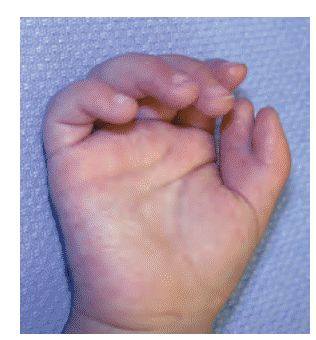
Holding your newborn's tiny hands for the first time is one of the most memorable experiences for any parent. In some instances, parents notice that their baby's fingers are joined together by skin or that an extra little digit rests along the edge of the hand. Finding an unexpected hand difference can naturally cause worry, raising questions about whether the child will be able to grip toys, write easily, or play sports as they grow.
Congenital hand conditions, such as syndactyly (webbed fingers) and polydactyly (extra digits), are among the most frequent variations seen in newborn medicine. These conditions occur early in pregnancy when the embryonic hand paddle divides into individual fingers. Understanding how pediatric hand surgery in Delhi approaches these structural differences helps parents make informed, stress-free decisions to support their child's long-term manual dexterity.
Understanding Webbed Fingers and Extra Digits
During early fetal development, a baby's hands initially form as tiny paddle-shaped buds. Around the sixth to eighth week of gestation, the tissue between the developing fingers naturally recedes through a normal cellular process. When this separation process pauses, two or more fingers remain joined together by a bridge of soft tissue or bone, a condition known as syndactyly.
Syndactyly can be simple, involving only skin and soft tissue, or complex, where adjacent finger bones or fingernails share structural connections. In polydactyly, on the other hand, the hand develops an additional digit, most frequently beside the little finger or adjacent to the thumb. Because thumbs play a central role in human grip, extra thumb digits require careful reconstruction to ensure normal alignment and joint stability. Consulting specialists in pediatric hand surgery in Delhi allows parents to understand the anatomical specifics of their child's hand before planning reconstructive steps.
When Is the Ideal Age for Surgical Correction?
Timing is an important consideration when correcting congenital hand differences. In the first few months of life, infants explore their surroundings using gross motor reflexes, relying on touch and basic grasping movements. As babies approach their first birthday, however, they begin developing fine motor dexterity, such as using the thumb and index finger to pick up small objects.
For webbed fingers involving digits of unequal length—such as the thumb and index finger, or the ring and little finger—early surgical separation is recommended between six to twelve months of age. Because fingers of different lengths grow at varying speeds, leaving them attached can cause the longer finger to bend or twist toward the shorter one. For fingers of similar length, such as the middle and ring fingers, separation is typically performed between twelve to eighteen months of age, ensuring the child heals well before starting preschool.
How Reconstructive Surgeons Separate and Rebuild Fingers
Separating webbed digits is not simply a matter of cutting skin in a straight line. Healing skin naturally tightens as it scars, which can pull fingers backward and restrict movement if straight incisions are used. Pediatric surgeons use zig-zag incisions, known as z-plasties, to distribute tension evenly around the new fingers.
When the skin between the fingers is insufficient to cover the repaired area, surgeons may use small skin grafts or nearby tissue to close the gap. In cases of extra fingers, surgery may also involve adjusting joint structures, repairing ligaments, and reattaching tendons to support stable movement. Pediatric hand surgery in Delhi focuses on correcting these abnormalities while protecting developing bones, joints, and growth plates wherever possible.
Post-operative recovery focuses on keeping the child comfortable with soft protective bandages that allow normal arm movement while shielding delicate suture lines. Within a few weeks, the bandages are removed, and the child instinctively begins using their newly freed fingers in play. Early, specialized reconstruction ensures that children grow up with balanced, capable hands, allowing them to draw, write, and play without hesitation.
Frequently Asked Questions
Is syndactyly surgery painful for a toddler?
Modern pediatric anesthesia and localized nerve blocks ensure that children feel no pain during the procedure. Post-operative discomfort is mild and easily managed with prescribed pediatric syrups for the first few days.
Will an extra finger grow back after surgical removal?
No. When an extra digit is completely removed and its joint capsule and tendons are reconstructed by a qualified surgeon, it does not regenerate.
Does a child need hand therapy after webbed finger separation?
Most toddlers naturally rehabilitate their hands through daily play and crawling once dressings are removed. In cases of complex bone joining, brief occupational therapy helps optimize finger movement.
- Pediatric Hand Surgery in New Rajinder Nagar
- Pediatric Hand Surgery in Karol Bagh
- Pediatric Hand Surgery in Patel Nagar
- Pediatric Hand Surgery in Jhandewalan